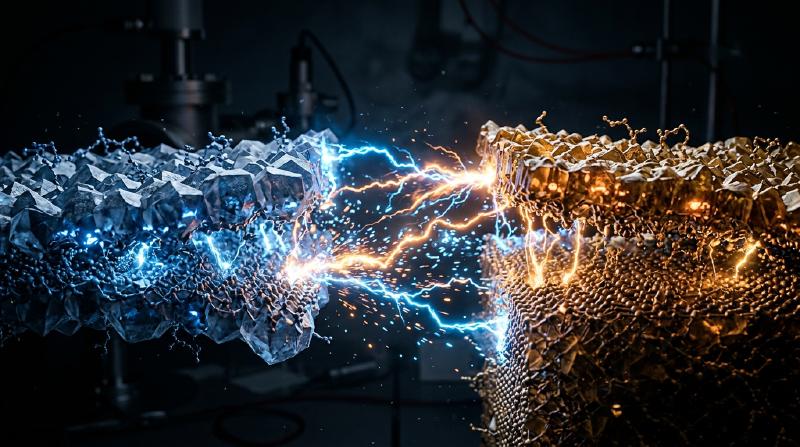
From winter doorknob shocks and volcanic lightning to N95 electret respirators and Triboelectric Nanogenerators (TENG). Explore the 2,600-year-old scientific mystery of contact electrification through the Overlapped Electron-Cloud model, ion partitioning, mechanochemistry, and Paschen's Law.
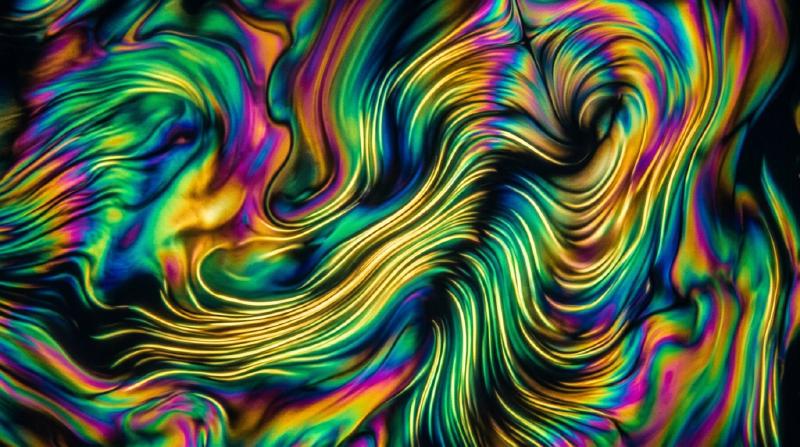
A comprehensive academic exploration of liquid crystal physics: from Friedrich Reinitzer's 1888 discovery of double melting points and Pierre-Gilles de Gennes's soft matter revolution to quadrupolar tensor order parameters, Nematic/Smectic/Cholesteric symmetry breaking, Landau-de Gennes vs. Onsager hard-rod statistical mechanics, Oseen-Frank elasticity, the Fréedericksz transition in LCDs, half-integer topological disclinations in RP^2, and active biological matter.
An in-depth philosophical and cognitive science analysis of Andy Clark and David Chalmers's Extended Mind Thesis (1998): epistemic actions, the Parity Principle, Otto and Inga, the Coupling-Constitution Fallacy, Second- and Third-Wave Predictive Processing, and Riley v. California.
From Georg Cantor's discovery of continuum cardinality to the rigorous construction of the Peano and Hilbert curves, complete proofs of uniform convergence, surjectivity, 1/2-Hölder continuity, and nowhere differentiability, topological vs. Hausdorff fractal dimension, and modern computer science applications including Google S2 and Hilbert R-Trees.
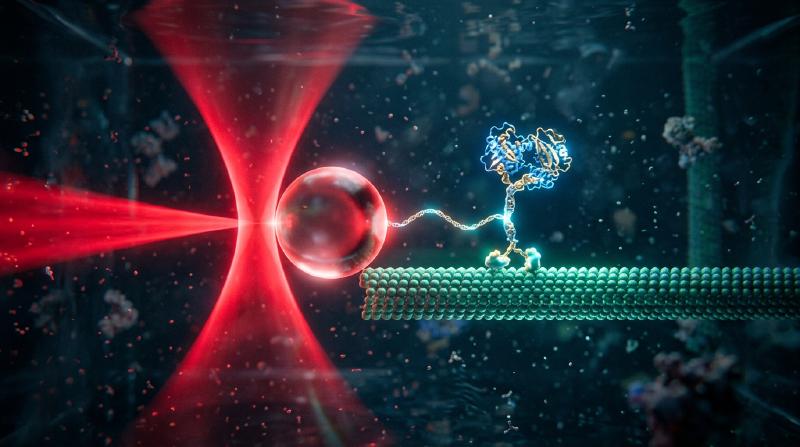
A rigorous physical and biophysical treatise on how massless photons exert mechanical forces to trap and manipulate microscopic matter. From Maxwell's electromagnetic radiation pressure and Arthur Ashkin's 1970–1986 breakthroughs to ray-optics refraction, Rayleigh dipole gradient vs. scattering forces, Langevin dynamics of Brownian motion, piconewton force calibration, and single-molecule studies of DNA elasticity and kinesin molecular motors.
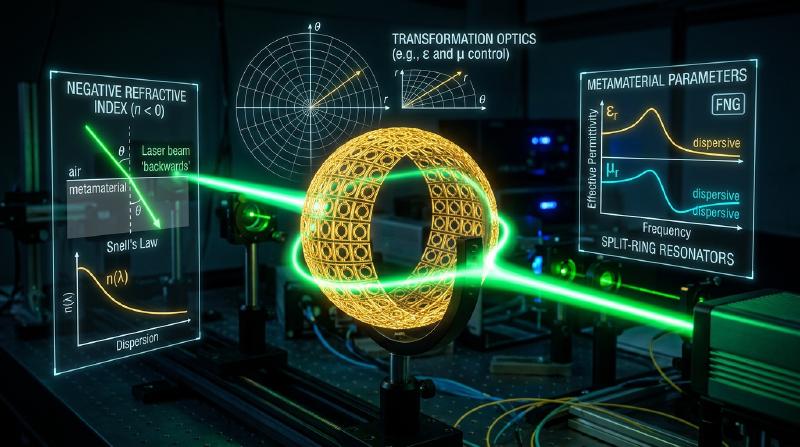
An in-depth academic exploration of optical metamaterials, negative refractive index, superlenses, and transformation optics invisibility cloaking—from Veselago's 1968 theoretical predictions and Pendry's split-ring resonators to Kramers-Kronig causality bounds, plasmonic losses, and modern all-dielectric metasurfaces.
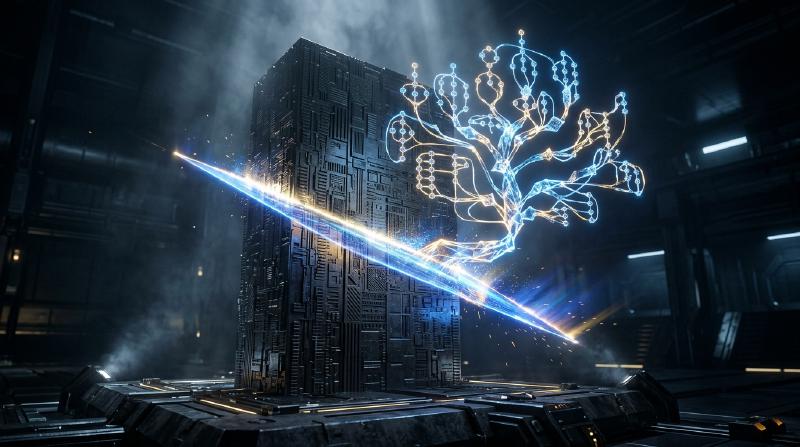
Why is decompiling a stripped binary (.exe or ELF) back into C/C++ source code compared to 'unscrambling an omelet'? A deep technical exploration of linear sweep vs. recursive traversal disassembly, IR lifting and Static Single Assignment (SSA), lattice-based type inference, dominator trees and goto-free control-flow structuring (DREAM), compiler optimization camouflage, obfuscation (OLLVM/VMProtect), and neural LLM decompilers.
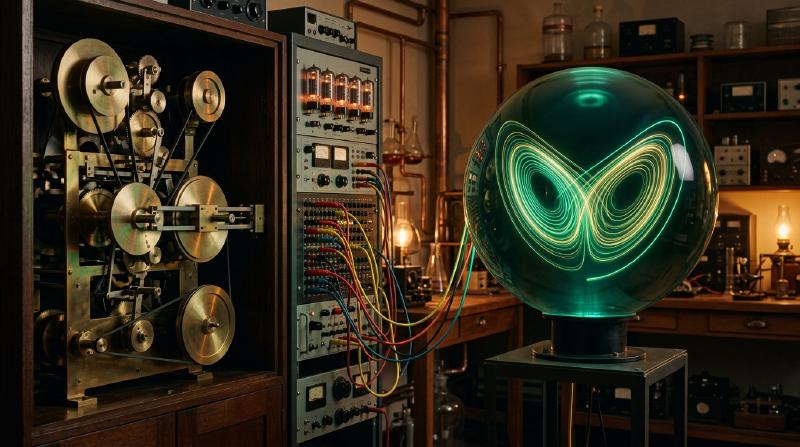
A comprehensive exploration of analog computing: from the Antikythera mechanism, Lord Kelvin's tide-predicting machine, and Vannevar Bush's Differential Analyzer to operational amplifier (op-amp) Miller integrators, Kelvin's feedback bootstrap method for solving differential equations, the Shannon-von Neumann thermal noise limit, and the modern renaissance of analog in-memory, photonic, and neuromorphic computing for AI.
An in-depth philosophical and mathematical exploration of Derek Parfit's Repugnant Conclusion, the Mere Addition Paradox, the clash between Total and Average Utilitarianism, the Sadistic Conclusion, and Gustaf Arrhenius's Impossibility Theorem in Population Ethics.
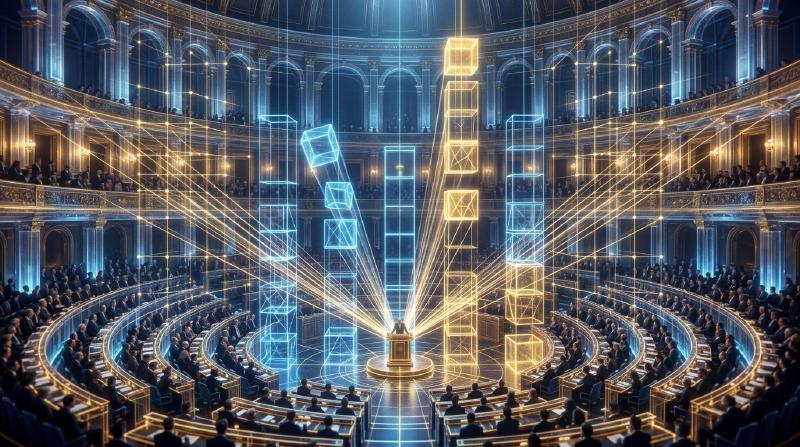
From George Washington's first presidential veto in 1792 to the Alabama Paradox, Population Paradox, New States Paradox, Divisor Methods (Jefferson/D'Hondt, Adams, Webster/Sainte-Laguë, Huntington-Hill), and the Balinski-Young Impossibility Theorem—an exhaustive mathematical exploration of why dividing integer seats proportionally is provably impossible without sacrificing either the Quota Rule or monotonicity.
How do deterministic computers generate random numbers, and why does observing just 624 outputs of Mersenne Twister (MT19937) allow an attacker to predict 100% of its future and past outputs? An in-depth guide to PRNGs vs. TRNGs, Linear Congruential Generators (LCGs) and IBM's RANDU 15-plane lattice failure, MT19937, PCG64, Xoshiro256++, Andrew Yao's Next-Bit Unpredictability Theorem, CSPRNGs (ChaCha20, AES-CTR_DRBG, and the NSA Dual_EC_DRBG backdoor), thermal noise min-entropy extraction, and the 2008 Debian OpenSSL disaster.
An in-depth academic exploration of lightning physics: from non-inductive graupel-ice crystal charge separation and the reversal temperature in cumulonimbus clouds, to cosmic-ray Relativistic Runaway Electron Avalanches (RREA), Dielectric Breakdown Model (DBM) fractal branching of stepped leaders, 30,000 K return strokes, cylindrical blast wave acoustics, mesospheric sprites/ELVES, and antimatter-producing Terrestrial Gamma-ray Flashes (TGFs).
From Barton Miller's stormy 1988 night in Wisconsin to AFL/AFL++, LibFuzzer, AddressSanitizer (ASan) shadow memory, and Andreas Zeller's Delta Debugging (ddmin)—a rigorous deep dive into how compile-time edge instrumentation, 64 KB L1-resident bitmaps, forkservers, genetic mutation schedules, and dynamic sanitizers automatically expose deep vulnerabilities that human unit tests never reach.
Why does the winning strategy for the ancient game of Nim reduce entirely to the bitwise XOR (Nim-sum) of heap sizes? This comprehensive mathematical guide explores Impartial Combinatorial Games from backward induction and P/N-position partitioning to a rigorous proof of Bouton's Theorem (1901), the Minimum Excluded value (mex), Grundy values (nimbers), the Sprague-Grundy Theorem (1935/1939), applications to Subtraction Games, Kayles, and Green Hackenbush, and the subtle endgame phase transition required under Misère Play.
An exhaustive philosophical and mathematical exploration of whether mathematical objects are discovered or invented: Mathematical Platonism and Paul Benacerraf's twin dilemmas, Logicism and Russell's Paradox, Hilbert's Formalism and Gödel's Incompleteness Theorems, Intuitionism and the Curry-Howard Isomorphism, Mathematical Structuralism, Hartry Field's Fictionalism vs. Quine-Putnam Indispensability, and Eugene Wigner's Unreasonable Effectiveness of Mathematics.
An exhaustive academic exploration of the Demarcation Problem in the philosophy of science: tracing the evolution from Vienna Circle verificationism and Karl Popper's falsifiability through the Duhem-Quine thesis, Thomas Kuhn's paradigms, Imre Lakatos's Methodology of Scientific Research Programmes (MSRP), to modern family resemblance cluster models, the Replication Crisis, and the string theory debate.
An in-depth philosophical analysis of Derek Parfit's Non-Identity Problem (Reasons and Persons, 1984): Gamete Origin Essentialism, the Time-Dependence Claim, the Depletion policy paradox, the five major ethical solutions, climate discounting, and CRISPR vs. embryo selection.
Why can two threads executing `x = 1; r1 = y;` and `y = 1; r2 = x;` produce `r1 == 0 && r2 == 0`—an outcome mathematically impossible under Leslie Lamport's Sequential Consistency? An exhaustive architectural and formal guide to CPU Store Buffers, MESI cache coherency, Invalidate Queues, compiler reordering, the DRF-SC Theorem, Happens-Before relations, Acquire-Release synchronization, and hardware memory fences (MFENCE, DMB, LDAR/STLR).
What fundamentally separates 1,000,000 bits of alternating 01s, the first 1,000,000 binary digits of pi, and 1,000,000 fair coin tosses? Going beyond Shannon entropy, this comprehensive academic guide explores Algorithmic Information Theory (AIT), Kolmogorov complexity, the Invariance Theorem, the Pigeonhole Principle proof of incompressibility, Martin-Löf randomness, Berry's Paradox, Chaitin's Incompleteness Theorem and Halting Probability Omega, Normalized Compression Distance (NCD), and why modern Large Language Models embody the principle that compression is intelligence.
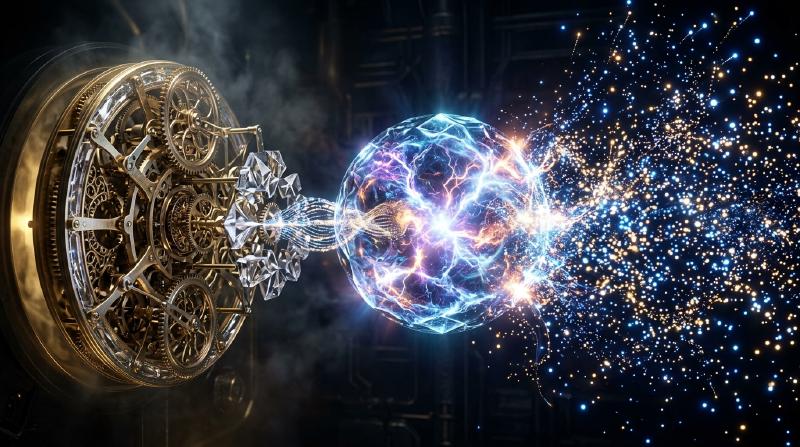
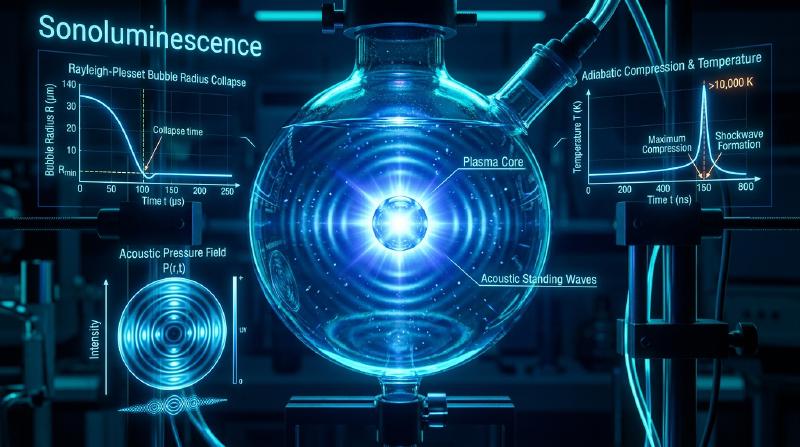
When a microscopic gas bubble in liquid is irradiated by ultrasound, acoustic energy concentrates by 12 orders of magnitude to emit picosecond flashes of ultraviolet light. A comprehensive treatise on the Rayleigh-Plesset equation, Bjerknes forces, Argon rectification, and plasma bremsstrahlung.