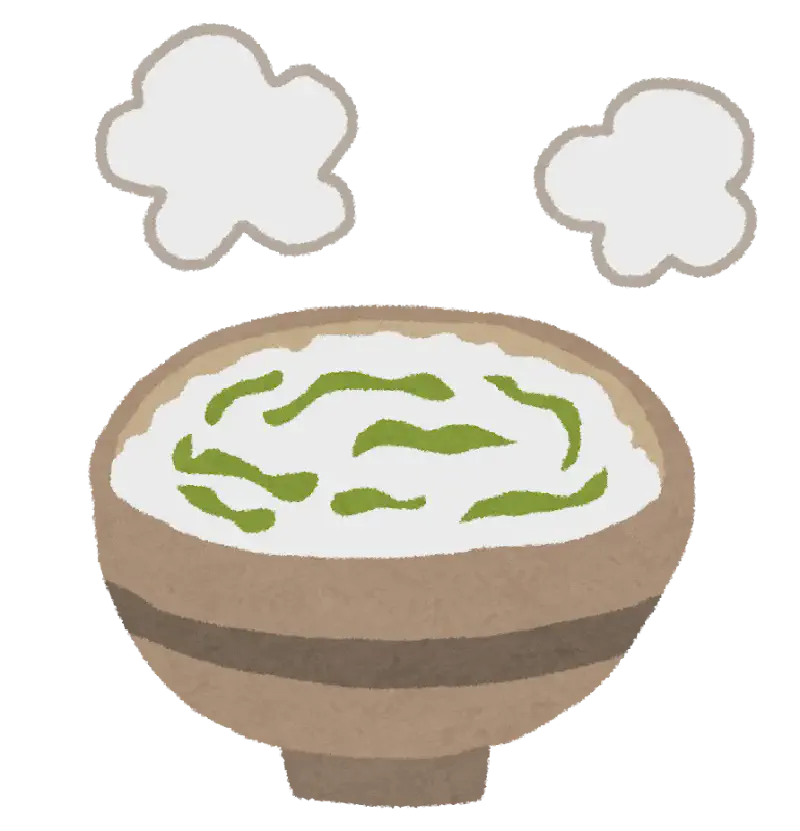
In Japan, people traditionally eat rice porridge with seven spring herbs on January 7, the Jinjitsu observance, as a wish for health in the year ahead. This is a cultural food custom, not a way to prevent or treat illness.
Seven Herbs (Nanakusa)
- Seri (Water dropwort)
- Nazuna (Shepherd’s purse)
- Gogyo (Cudweed)
- Hakobera (Chickweed)
- Hotokenoza(ほとけのざ)— ko-onitabirako(コオニタビラコ、Lapsanastrum apogonoides)
- Suzuna (Turnip)
- Suzushiro (Radish)
Basic recipe (2–3 servings)
Ingredients: 75 g uncooked rice (1/2 Japanese go-cup), 600 mL water, one commercially sold pack of spring seven herbs, and about two pinches of salt. Add water gradually, up to about 900 mL, for softer porridge. Pack contents can vary.
Rinse the rice, add it and the water to a pot, and bring to a boil over medium heat. Stir once from the bottom, lower the heat, leave the lid slightly ajar, and simmer for 30–40 minutes. Watch for boil-overs and avoid frequent stirring. Wash and chop the herbs. Cut any turnip or daikon roots into small pieces and cook until tender; briefly blanch the leaves and stems in lightly salted water. When the rice is soft, add the herbs and season with salt. Follow the pack directions if provided. For a rice cooker, use the porridge setting and water markings in its manual.
Foraging safety
Some wild plants resemble edible species, and look-alikes can be poisonous. Do not gather or eat wild plants unless a qualified expert has identified them. A food-labelled herb pack is safer. The traditional herb hotokenoza is ko-onitabirako (Lapsanastrum apogonoides); do not identify a plant by its common name alone.