Why Do Living Organisms Keep a 24-Hour Rhythm Even in Complete Darkness? The Science of Circadian Clocks and Molecular Oscillations
Why Do Water Droplets Dance on a Hot Skillet Instead of Evaporating? The Fluid Dynamics of the Leidenfrost Effect and Vapor Cushions
Why Fireflies and Deep-Sea Creatures Glow Without Heat: The Quantum Chemistry of Bioluminescence and Cold Light
Why Friction Is Independent of Contact Area: The Microscopic Physics of Asperities, Stick-Slip Dynamics, Ice Premelting, and Superlubricity
Why Geckos Can Walk Upside Down on Glass Ceilings: Van der Waals Forces, Hierarchical Nano-Setae, and Contact Mechanics
Why Is Ice So Slippery? Refuting the Pressure-Melting Myth and the Physics of Surface Premelting, Frictional Heating, and Nanotribology
Why Morpho Butterflies and Jewel Beetles Shine Without Pigments: The Physics of Structural Color and Light Interference
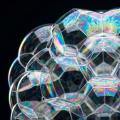
Why Soap Bubbles Are Round and Foam Walls Meet at 120 Degrees: The Physics of Surface Tension and Plateau's Laws
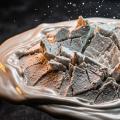
Why You Can Run on Cornstarch and Water: The Physics of Non-Newtonian Fluids, Shear Thickening, and Rheology
Can We Generate Electricity from a Temperature Difference? The Physics of Thermoelectricity and Peltier Devices
How Do Metals 'Remember' Their Original Shape? Shape Memory Alloys and the Physics of Crystalline Metamorphosis
Pressing Generates Electricity, Electricity Drives Deformation: The Piezoelectric Effect and Crystal Symmetry
Why Does a Mixed Liquid Periodically Change Color? Chemical Oscillations and the Non-Equilibrium World
Why Does Water Cross a Membrane? From Chemical Potential and Osmotic Pressure to Seawater Reverse Osmosis
Why Rubbing Objects Creates Electricity: The Deep Physics of Contact Electrification and Static Charge
Can Light Grasp Microscopic Matter? Optical Tweezers and the Physics of Manipulating Single Molecules
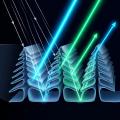
Can Material Properties Be Engineered by Shape Alone? The Science of Optical Metamaterials and Invisibility Cloaking