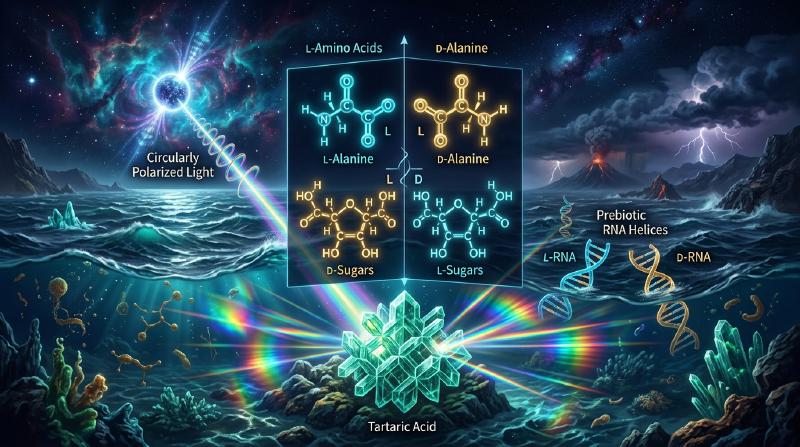
A definitive multidisciplinary treatise on the mystery of molecular chirality and the evolutionary emergence of homochirality in terrestrial biochemistry. Tracing stereochemistry from Louis Pasteur's 1848 tartrate crystal sorting to the pharmacology of the thalidomide tragedy; examining why all life relies exclusively on L-amino acids and D-sugars; decoding the three leading origin hypotheses (cosmic circularly polarized light and meteoritic amino acid excesses, chiral mineral surface templating, and electroweak parity violation with parity-violating energy differences); analyzing the nonlinear dynamics of asymmetric amplification through the Frank autocatalytic bifurcation model, the landmark Soai reaction, and Viedma ripening; and investigating the revolutionary biomedical promises and biosecurity perils of synthetic 'Mirror Life'.
In the mangrove forests of Southeast Asia, tens of thousands of fireflies flash in immaculate unison. In human chests, millions of pacemaker cells pace the heart without a conductor. Across continents, electrical grids hum at an identical, locked frequency. How do disparate individual oscillators, each possessing its own intrinsic frequency, spontaneously march in lockstep? From Christiaan Huygens's 1665 discovery of the 'sympathy of clocks' to Poincaré limit cycles, phase reduction theory, the Kuramoto Model, the Ott-Antonsen ansatz, chimera states, and the stability of modern renewable power grids, this treatise unpacks the deep mathematics of spontaneous collective synchronization.
Behind the simple alignment of a pocket compass lies one of the grandest mysteries in planetary physics: how does a celestial sphere sustain a magnetic shield in an interior thousands of degrees hotter than the Curie point of any permanent magnet? From William Gilbert's 1600 treatise De Magnete to the magnetohydrodynamic induction equation, the alpha-omega feedback cycle, the frozen-in flux theorem of Hannes Alfvén, seafloor spreading, the Chibanian magnetic reversal, and the protective embrace of the magnetosphere shielding life from the solar wind, this treatise provides a rigorous, deep exploration of geodynamo theory.
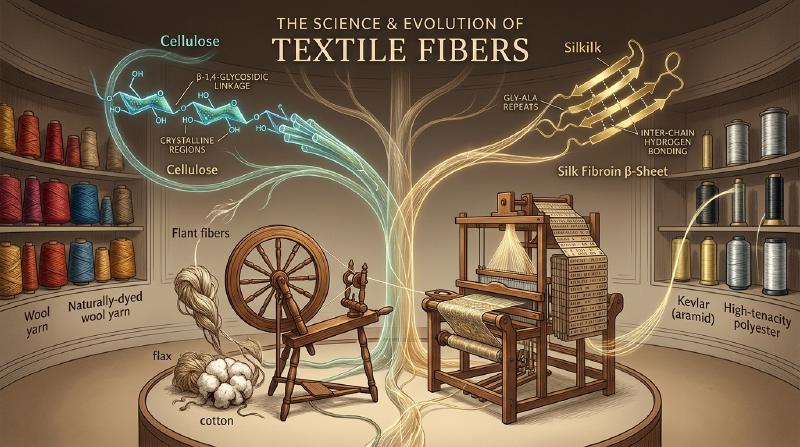
A comprehensive scientific treatise on textile history: from cellulose and keratin nanometer crystallography to capstan twist mechanics, the Industrial Revolution's spinning mule, the Jacquard loom's binary punch card genesis of digital computing, and modern aramid smart fabrics.
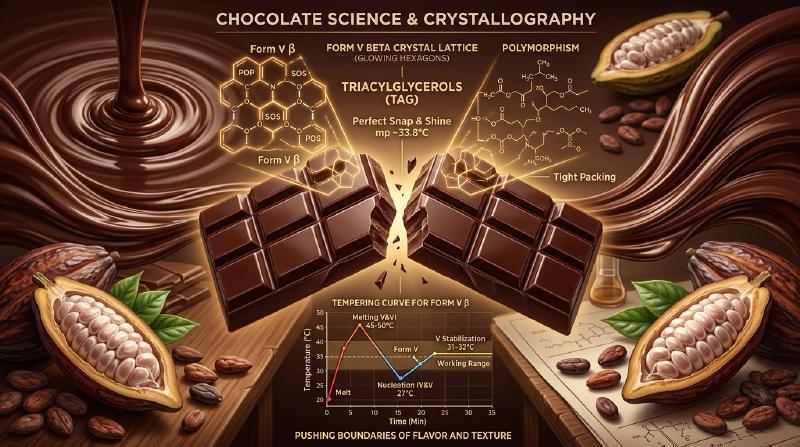
A comprehensive scientific treatise on chocolate: cacao bean fermentation, triacylglycerol (POP/POS/SOS) stereospecificity, Form I-VI polymorphic phase transitions, tempering nucleation kinetics, Casson rheology, and conching interface chemistry.
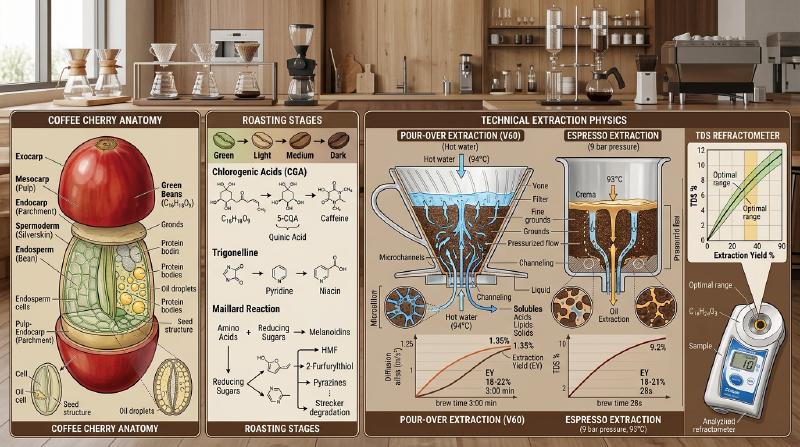
A definitive scientific treatise on coffee: from cherry morphology and microbial fermentation to roasting pyrolytic kinetics, porous media hydrodynamics, TDS/extraction yield mathematics, water coordination chemistry, and neurosensory perception.
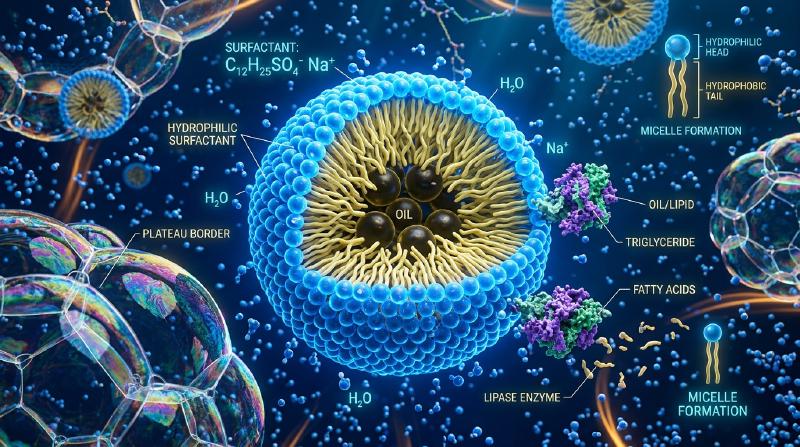
How amphiphilic molecules mediate between immiscible water and oil to strip stubborn lipids and soils at the nanoscale. An exhaustive analysis of thermodynamic hydrophobic effects, Gibbs adsorption isotherms, Critical Micelle Concentration (CMC), the mechanics of rolling-up, hard-water scum chemistry, synthetic surfactant classifications, bio-engineered multi-enzyme cleaning, and foam fluid dynamics via the Marangoni effect.
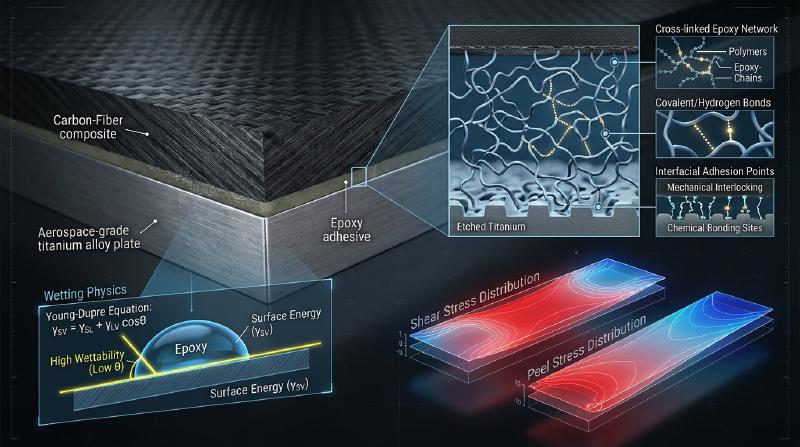
From household superglue to carbon-fiber jointing in modern stealth fighters and commercial airliners: what happens at the invisible nanoscale boundary? A comprehensive exploration of Young-Dupré wetting thermodynamics, van der Waals forces versus covalent chemisorption, cyanoacrylate anionic polymerization, epoxy 3D cross-linking, the Dahlquist criterion for pressure-sensitive tapes, fracture peel mechanics, and aerospace composite structural bonding.
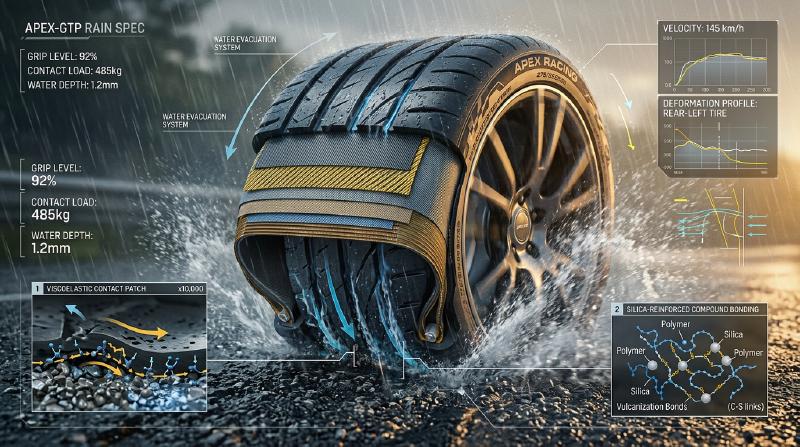
How a multi-ton vehicle traveling at highway speed accelerates, carves through hairpin curves, and stops on a dime via contact patches no larger than four postcards. Demystifying rubber viscoelasticity, hysteresis loss, molecular adhesion versus bulk indentation, hydroplaning fluid mechanics, Pacejka's Magic Formula, silica compound nanochemistry, and winter studless tire micro-pore physics.
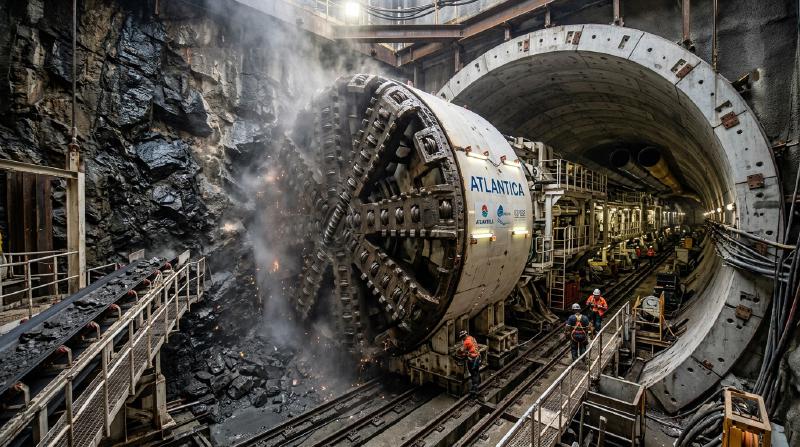
Withstanding millions of tons of overburden rock, shearing tectonic forces, and crushing hydrostatic pressure: how civil engineers pierce the subterranean abyss. A comprehensive analysis of shield tunneling, earth-pressure and slurry balancing, the NATM revolution, subsea breakthroughs like the Seikan and Channel Tunnels, immersed tubes, ground freezing, and modern safety ventilation.
How do thousands of tons of steel and asphalt hang suspended mid-air across stormy ocean straits without central pillars? A comprehensive engineering breakdown of suspension bridges: tension and compression decoupling, catenary and parabolic cable mathematics, aeroelastic flutter and the Tacoma Narrows catastrophe, cable-stayed comparisons, and the frontier of extreme civil engineering from the Golden Gate to the Akashi Kaikyo and 1915 Çanakkale bridges.