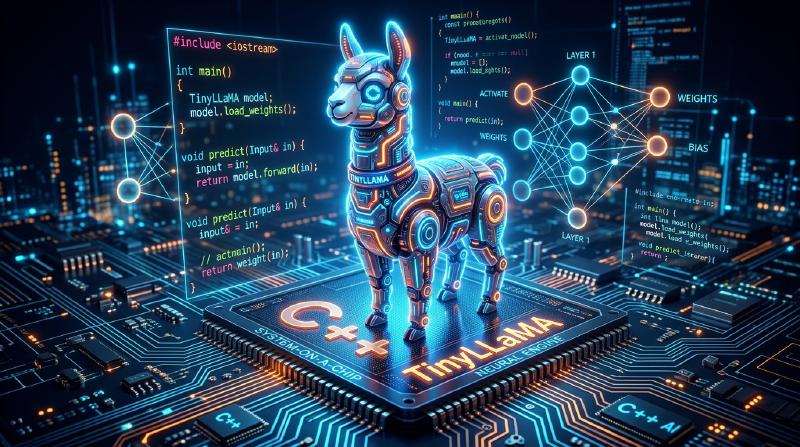
A detailed development guide and internal architecture explanation for running inference on small AI models like TinyLLaMA in a local environment using C++ and ggml. Covers memory mapping, tensor operations, and SIMD optimization.
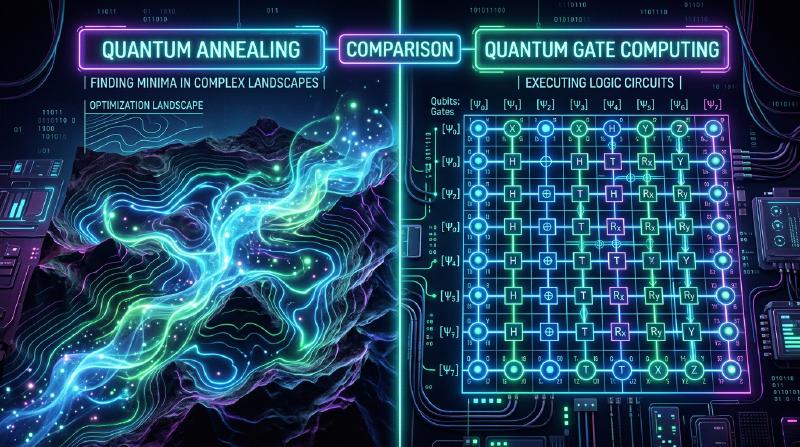
A thorough comparison and explanation of the two quantum computing architectures, Quantum Annealing and the Gate Model, from mathematical models and physical backgrounds such as the Ising model, QUBO formulation, unitary transformation, and error correction, to specific use cases.
A complete guide covering everything from the basics of llama.cpp to advanced C++ customization, the mathematical background of Transformers, and the ggml architecture.
A detailed explanation of how quantum computers could break modern cryptography, covering the mathematical background of Shor's algorithm to its implementation in Python.
A comprehensive guide on the threat of cryptography compromise due to the rise of quantum computers and the NIST standard Post-Quantum Cryptography (PQC) algorithms such as Kyber, Dilithium, FALCON, and SPHINCS+ that counter it, from the mathematical foundation of lattice-based cryptography (LWE problem) to detailed mechanisms and performance comparisons.
A complete guide to integrating high-accuracy speech recognition AI into edge devices and native applications using C++ and whisper.cpp. Covers everything from the basics of audio signal processing to optimizing real-time inference.
Local LLMs that protect privacy and can be used for free. In this article, we thoroughly compare and explain top-class open source LLMs such as Llama 3, Mistral, Gemma 2, Qwen 2.5, and Phi-3 from a technical perspective.
VRAM (GPU memory) shortage is the biggest barrier in LLM training and inference. This article thoroughly explains resolution techniques such as CPU offloading, KV cache quantization, and gradient checkpointing, using mathematical formulas and architecture diagrams.
A highly detailed explanation of the internal structure of the GGUF format and k-quants quantization technology adopted in llama.cpp, including mathematical formulas and architecture diagrams.
![Featured image of post [Math Explanation] Explaining How RSA Encryption Works So Even a High Schooler Can Understand](/p/rsa-encryption-math-explained-for-beginners/img/eyecatch_hu327954668474118140.jpg)
![Featured image of post [RAG Implementation Guide] How to Load Your Own Documents into Local AI](/p/rag-local-ai-implementation-guide/img/eyecatch_hu11218043209250547443.jpg)



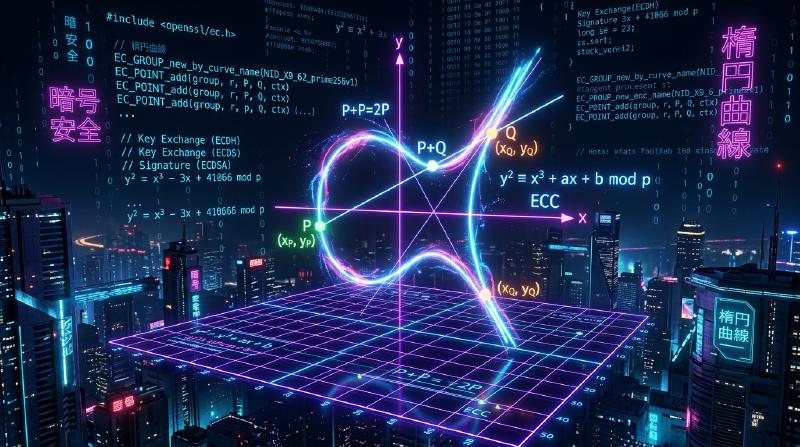

![Featured image of post [Illustrated PQC] Comparison of Major Post-Quantum Cryptography Algorithms](/p/post-quantum-cryptography-algorithms-comparison/img/eyecatch_hu17559263150303002454.jpg)