How Faraday's Law, Lenz's Law, Lorentz forces, BLDC motors, and regenerative braking transformed electromagnetic theory into the propulsion powering modern electric vehicles.
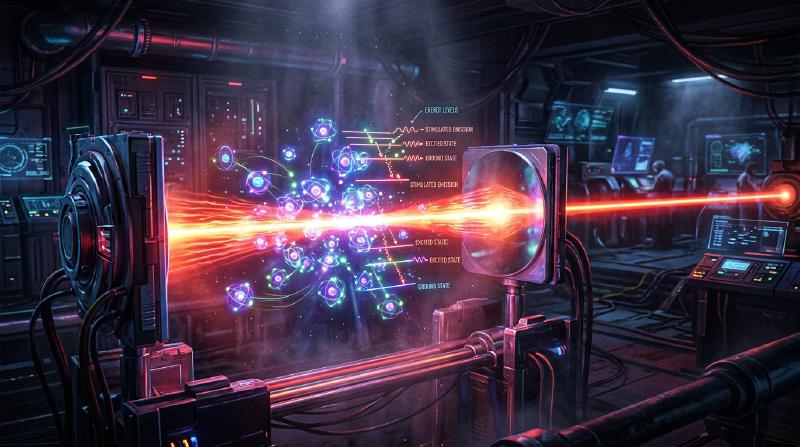
Explore the quantum physics behind lasers: Einstein's three radiative processes, population inversion, optical resonators, rate equations, and ultrashort pulses.
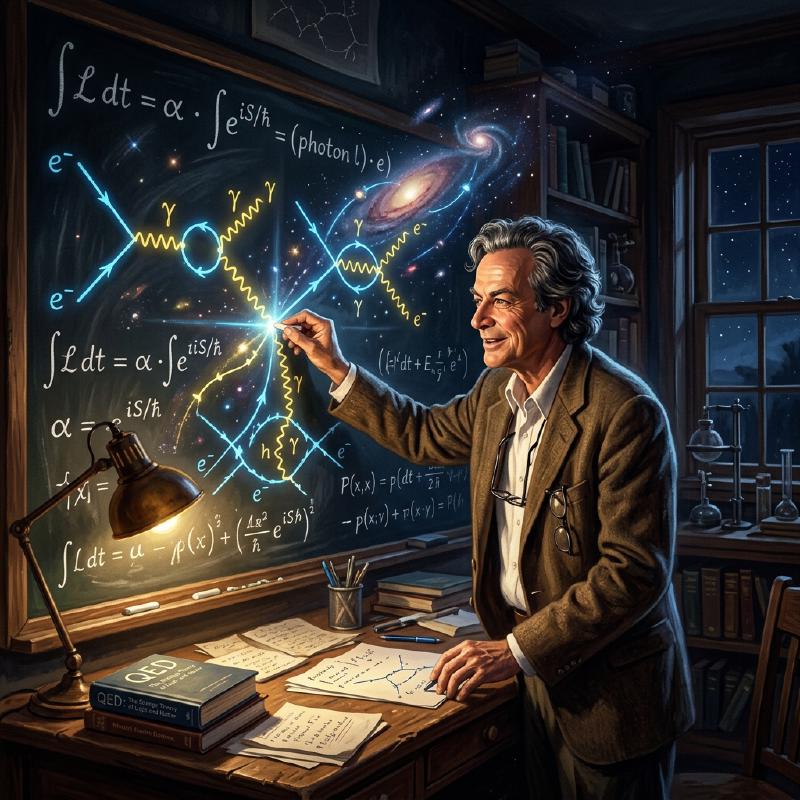
Nobel laureate in physics, Richard Feynman. From building quantum electrodynamics to investigating the Challenger accident, and even safe-cracking and playing the bongos, we thoroughly explain his wildly unconventional life filled with insatiable curiosity and 'the pleasure of finding things out'.
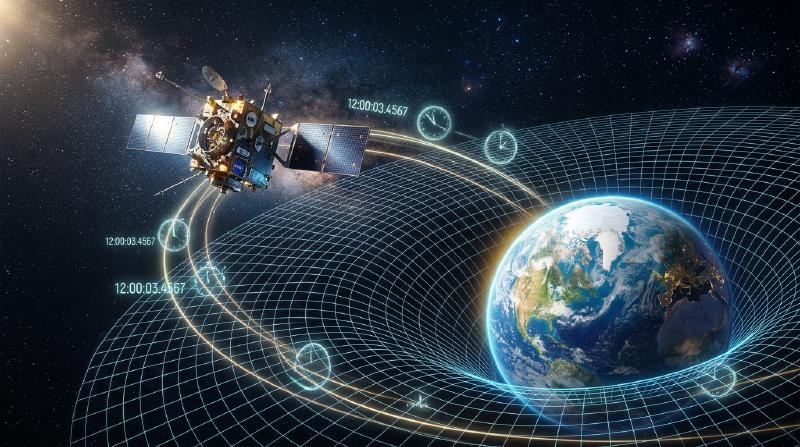
Discover the physics behind GPS: how trilateration, relativistic time dilation (+38 microseconds/day), atomic clocks, and orbital mechanics ensure pinpoint location accuracy.
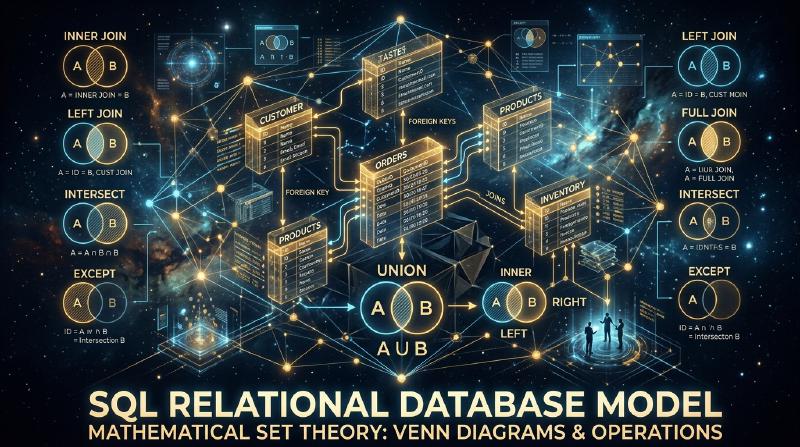
A deep dive into the relational model underlying SQL and Codd's set theory. A definitive, long-form article detailing everything from the historical background of databases to their mathematical foundations and philosophical implications in modern application design.
A detailed explanation of the life and achievements of Srinivasa Ramanujan, a genius mathematician known as the 'Indian Magician' who discovered numerous unknown formulas using only intuition, and his impact on modern mathematics.
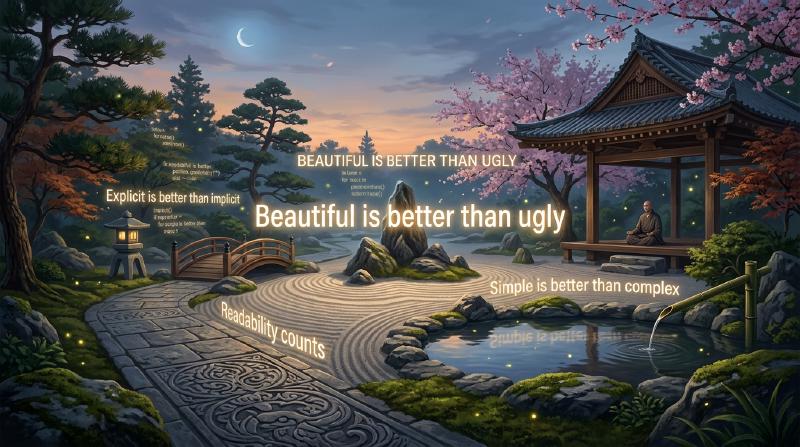
A thorough explanation of Python's design philosophy 'The Zen of Python (PEP 20)', from its historical background to the deep meaning of its 19 aphorisms, and why it is considered so important in modern software development.
A detailed explanation of the grandfather paradox, the greatest challenge in time travel, from the perspectives of physics and philosophy, covering relativity, quantum mechanics, the many-worlds interpretation, and Novikov's self-consistency principle.
How was the "mouse", essential to modern computer operation, born? A thorough explanation of its epic history, from Douglas Engelbart's philosophy of "Augmenting Human Intellect" to The Mother of All Demos in 1968.
In 1969, Apollo 11 succeeded in humanity's first lunar landing. Behind this was the robust software developed by Margaret Hamilton and her team. We thoroughly explain her achievements, which laid the foundation of modern software engineering, and the full picture of the Apollo Guidance Computer (AGC) source code.
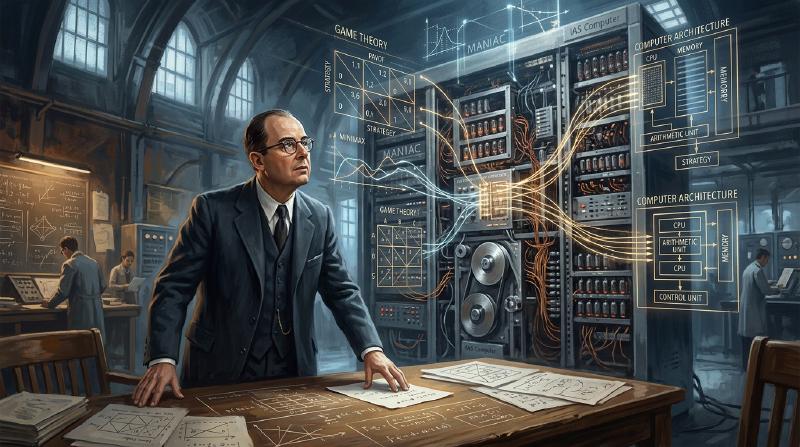
An in-depth explanation of the life and incredible achievements of John von Neumann, the 20th century's greatest genius, known as the "Devil's Brain", who laid the foundation for modern society in mathematics, quantum mechanics, game theory, computer science, and atomic bomb development.
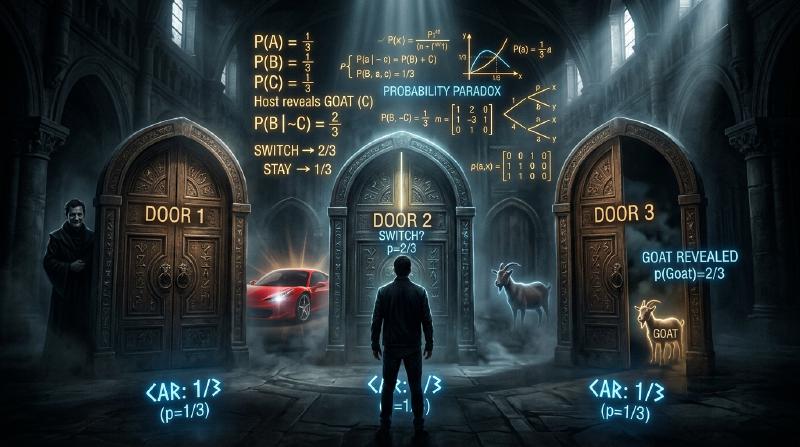
The "Monty Hall problem" is a prime example of counterintuitive probability theory. Why does human intuition deviate so much from probability? From mathematical proofs to psychological backgrounds, we thoroughly explain the entire picture of this paradox.
The Enigma codebreaking that determined the outcome of World War II. We explain in detail the unknown battle of genius mathematician Alan Turing and the codebreakers at Bletchley Park.
An in-depth exploration of Rust's core concepts of "Ownership" and "Borrowing", thoroughly explaining how it balances memory safety and performance.
What is "Schrödinger's Cat"? A thorough explanation of the core of "superposition" and the "measurement problem" in quantum mechanics, from historical background to the many-worlds interpretation.
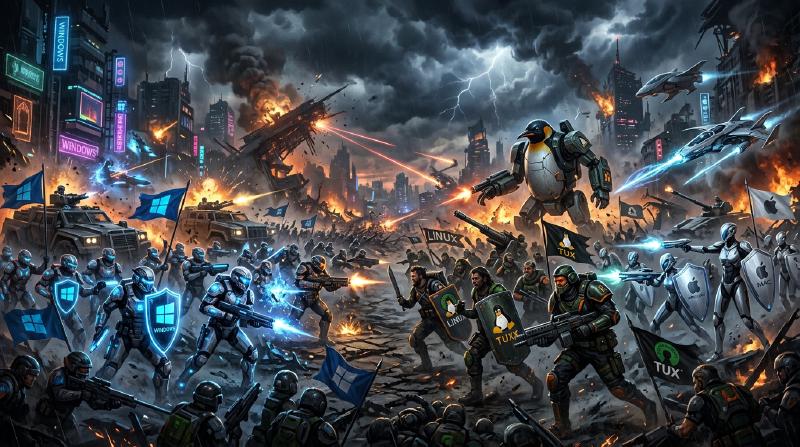
A deep dive into the 'OS Religious Wars' that have unfolded over decades. We thoroughly explore the philosophy, historical background, modern coexistence, and future of Windows, Mac, and Linux.
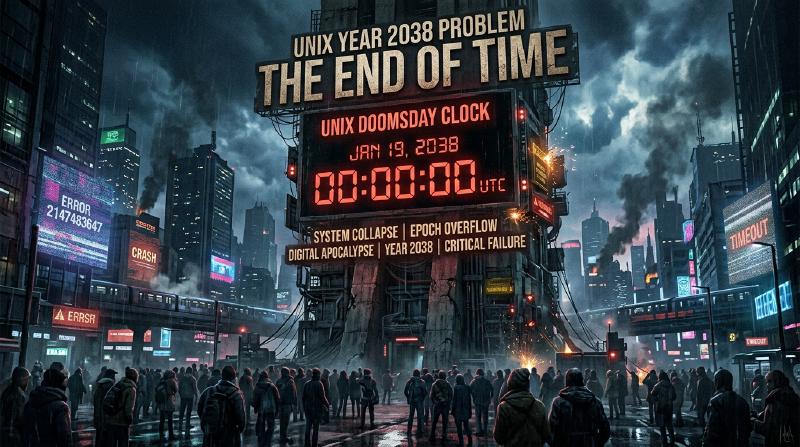
On January 19, 2038, UNIX time managed by a 32-bit signed integer will overflow, causing many computer systems to malfunction. We provide a detailed explanation of this '2038 problem', from its mechanism to its history, root causes, and solutions.
He is the man who made the modern internet something we take for granted, and who continues to shape the world by pouring massive amounts of funding into t
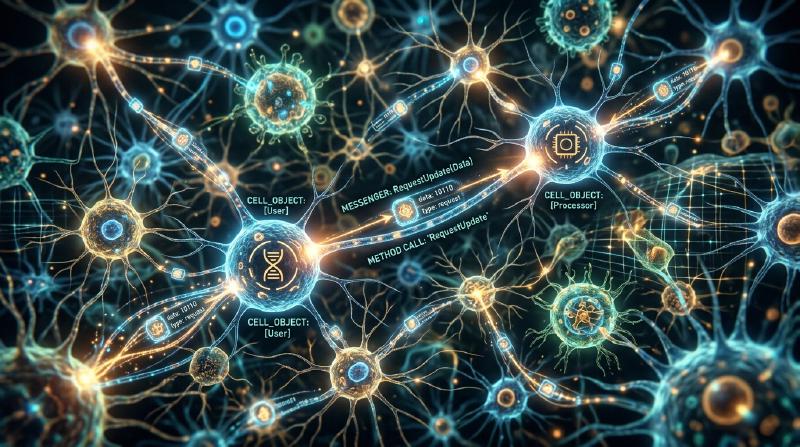
Object-Oriented Programming (OOP) is often misunderstood as "classes" and "inheritance", but its true core lies in "messaging". We thoroughly explain the truth of OOP through Alan Kay's vision and the cell metaphor.
A detailed explanation of how "The Cathedral and the Bazaar" laid the foundation for modern open source software development, from its historical background to its impact on modern software engineering.