A detailed guide on the Pareto Principle (80/20 Rule), which states that "80% of results come from 20% of causes." Explains its historical background, specific examples in business and daily life, and practical methods. A must-read for identifying the essence and achieving maximum results with minimal effort.
The historic event in 1997 when World Chess Champion Garry Kasparov was defeated by IBM's supercomputer Deep Blue. We thoroughly explain the background, the progression of the matches, and its impact on AI technology.
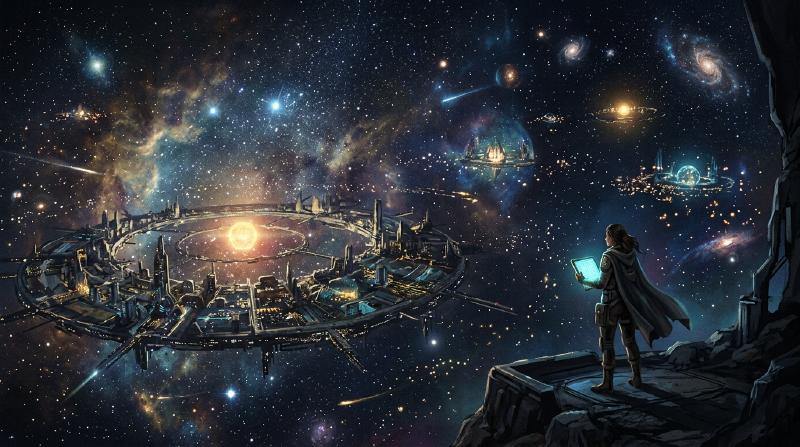
"Where are the aliens?"—An exhaustive exploration of the "Fermi Paradox," starting from physicist Enrico Fermi's casual question. This highly detailed guide delves into numerous hypotheses explaining the universe's silence, such as the Drake Equation, the Great Filter theory, and the Dark Forest hypothesis, approaching the significance of humanity's existence and future.
Are there as many "natural numbers" as their "squares"? A comprehensive guide from Galileo Galilei's profound thoughts on "infinity" left in his later years to its connection to modern set theory. A long-form article exploring the wonders and charm of infinity.
How programmable shaders, PBR, ray tracing, Nanite, Lumen, and DOTS transformed primitive polygons into photorealistic real-time virtual worlds.
Rear Admiral Grace Hopper of the US Navy, known as the "Mother of COBOL". From the invention of the compiler to the discovery of the first computer bug, we thoroughly explain the turbulent life and great achievements of the woman who laid the foundation for modern IT society.
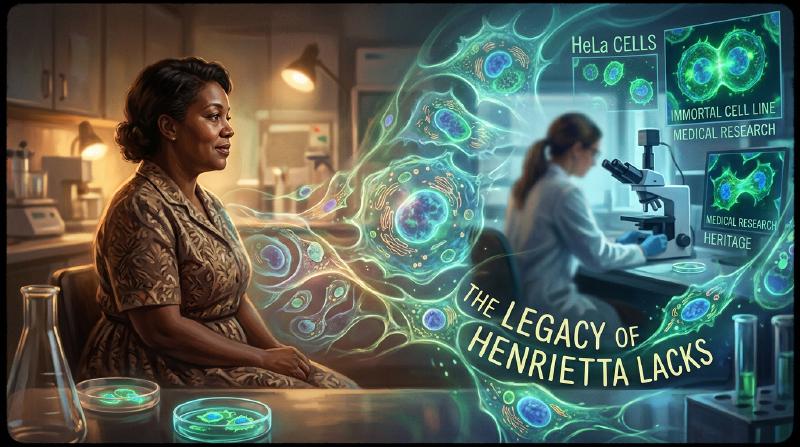
An in-depth look at the life of Henrietta Lacks, the scientific breakthroughs of HeLa cells, and their profound impact on bioethics, which are essential to modern medicine and biology.
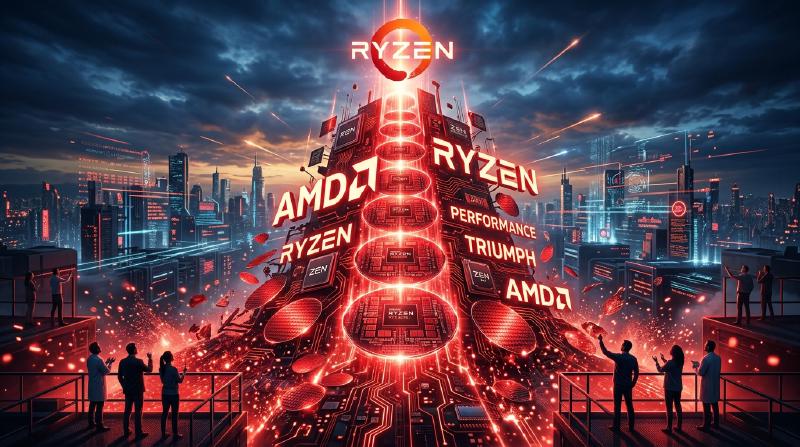
How Advanced Micro Devices survived near-bankruptcy, revolutionized CPU architectures with Zen, and challenged Intel's semiconductor hegemony.
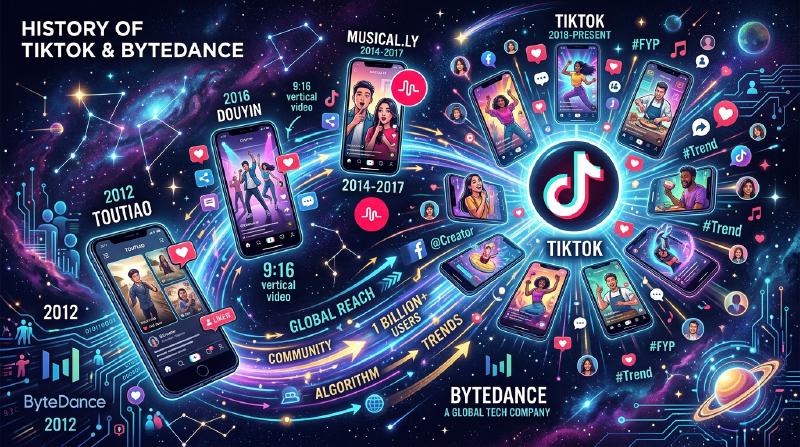
How Zhang Yiming built ByteDance from a Beijing apartment, disrupted legacy social networks with algorithmic content, and created global sensation TikTok.
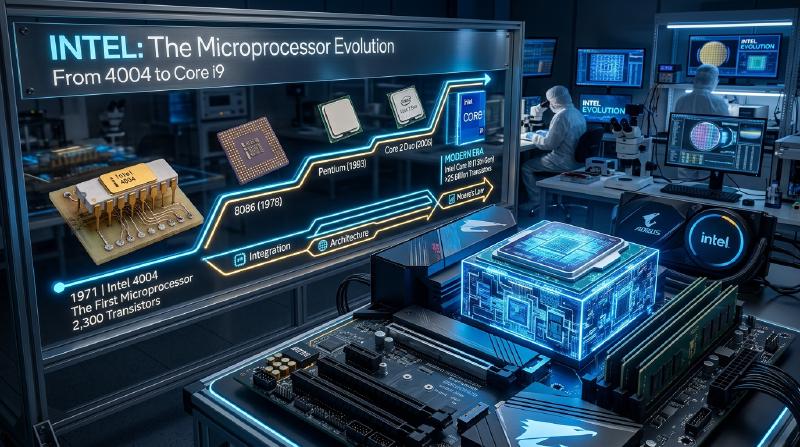
How Robert Noyce, Gordon Moore, and Andy Grove built Intel, invented the microprocessor, established Moore's Law, and shaped modern computing.
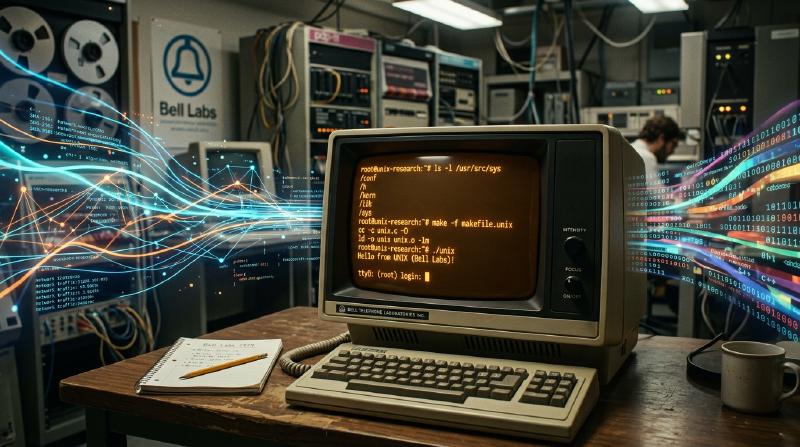
How Ken Thompson, Dennis Ritchie, C, the Unix Philosophy, and BSD transformed a PDP-7 project into the foundation of Linux, macOS, and global computing.
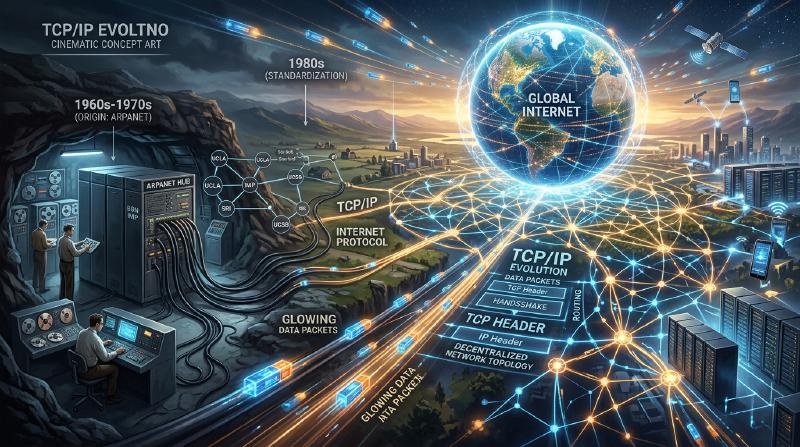
How packet switching, Vint Cerf, Bob Kahn, and 4.2BSD Unix transformed experimental military networks into the global foundation of modern communication.
How Marc Benioff launched the 'No Software' revolution from a San Francisco apartment and forged the world's leading enterprise cloud powerhouse.
A technical philosophy essay delving deeply into why the programming language Lisp is called the "Language of God," the beauty of S-expressions at its core, Homoiconicity, and the abyss of metaprogramming through macros.
Maxwell's Demon, the most famous paradox in the history of physics. How was this demon, which seemed to break the Second Law of Thermodynamics, born, and how was it exterminated over a century later? A thorough explanation of the trajectory to information thermodynamics.
How 'Moore's Law' has driven the semiconductor industry and realized exponential technological evolution in modern society. We comprehensively explain its history, mechanisms, limits, and future technologies.
An in-depth exploration of the life of genius inventor Nikola Tesla, the "War of the Currents" with Edison, and his grand, unfinished dream of the "World System" along with its technical background.
Explore the profound paradoxes of quantum physics: wave-particle duality, the double-slit experiment, wave function collapse, Schrödinger's cat, quantum entanglement, and quantum computing.
Explore Einstein's Special and General Relativity: the invariance of light speed, time dilation, E=mc^2, spacetime curvature, the Einstein field equations, and GPS applications.
How zero electrical resistance, Cooper pairs, the BCS theory, high-Tc cuprates, and quantum levitation power modern MRI, fusion, and quantum computing.