A complete coincidence between logical proofs and computer programs. A comprehensive guide from intuitionistic logic and simply typed lambda calculus to System F, dependent types, and Homotopy Type Theory (HoTT) paving the way to a bug-free world.
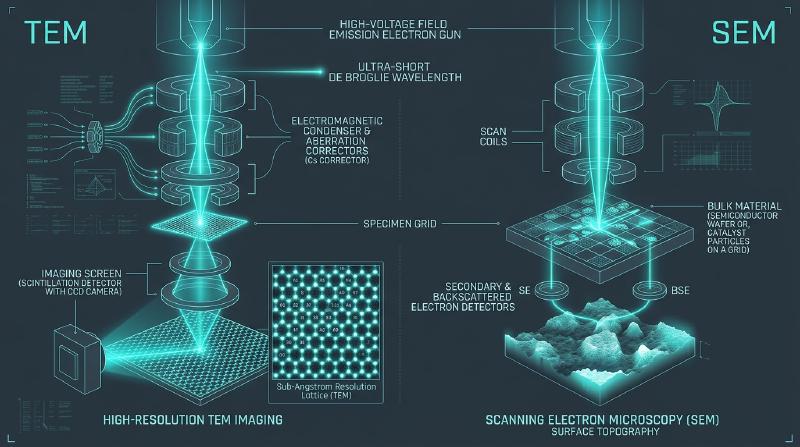
From matter-wave theory to electromagnetic lens design, and the ultra-high resolution world of visualizing a 'single atom' pioneered by spherical aberration correctors.
From Nausicaä of the Valley of the Wind to The Boy and the Heron. A complete guide in 8 chapters on the history, animation techniques, and evolution of themes of Studio Ghibli, Japan's world-renowned animation studio.
How does the largest infrastructure in human history operate? A thorough dissection from history, protocols, and the physical layer to the future of communication.
From the Michelson-Morley experiment to Einstein's theory of relativity.
The essence of Scrum, Kanban, and the Agile Manifesto.
The establishment of historical materialism and the reality of the working class. The life and philosophy of the man behind the scenes.
From requirement definition to operation. The waterfall-like process that supports large-scale projects.
Developers, brokers, and REITs. The business models of the people who create and move cities.
The evolution of financial markets, from the East India Company to modern algorithmic trading.
Differences from virtual machines, the layer structure of images, and container orchestration. Unraveling the essence of container technology from the perspectives of physics, history, and economics.
From the CFOP method to God's Number '20', the mathematical beauty hidden in the 3D puzzle.
Telomere shortening, reactive oxygen species, and the latest in anti-aging science.
The complete history and technology of LINE, which was born in the wake of the 2011 Great East Japan Earthquake and grew into a super app representing Asia through its sticker culture and unique communication architecture.
End-to-End Encryption (E2EE) and the philosophy of UI/UX that pursues ultimate simplicity.
From tanning techniques to the mechanisms of aging.
From gemstones to industrial rare metals, the geological romance hidden in rocks.
Optical viewfinder with pentaprism or electronic processing with EVF. The evolution of cameras.
How was a unique culture nurtured, and how did it transform into a modern state?
General relativity, the event horizon, and the mystery of Hawking radiation.