![Featured image of post [Biography] Charles Chaplin: The Life and Philosophy of the 'King of Comedy' Who Wove the World with Laughter and Tears](/p/biography-charles-chaplin/eyecatch_hu18193983461304788051.jpg)
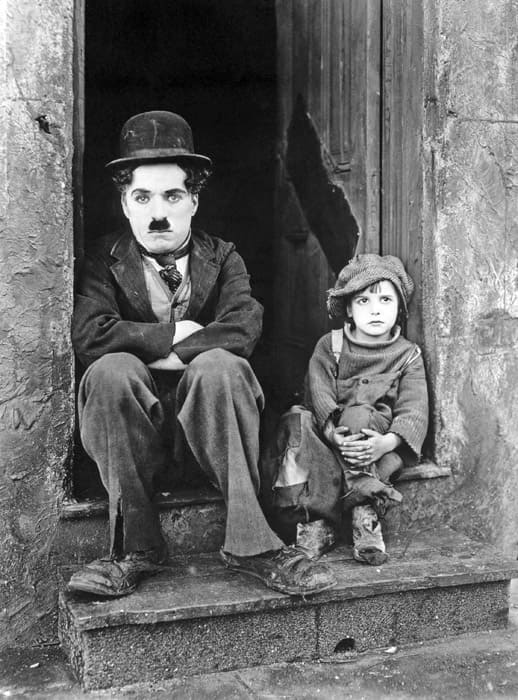
Charles Spencer Chaplin
Charles Spencer Chaplin (April 16, 1889 - December 25, 1977) was a British film actor, director, comedian, screenwriter, and composer. Known by the nickname “King of Comedy,” he is widely recognized as one of the most important and influential figures in the history of cinema. His iconic character “The Tramp,” with his bowler hat, toothbrush moustache, baggy trousers, and bamboo cane, continues to be loved by people all over the world. This article will unravel Chaplin’s turbulent life, the deep philosophy embedded in his works, and the influence he left on future generations.
The Origins of Comedy Born from Poverty and Loneliness
Charles Chaplin was born in 1889 to a poor family in London. Both of his parents were music hall entertainers, but they divorced when he was young. His father died early from alcoholism, and his mother suffered from mental illness and was institutionalized, leading to a harsh childhood. Amidst extreme poverty, moving between orphanages and workhouses, Chaplin danced and performed pantomime on the streets to earn a daily living in order to survive.
This harsh primal experience had a decisive influence on the formation of his later “Tramp” character. The sorrow of people living desperately at the bottom of society, and the human dignity and hope that are not lost despite it. At the root of Chaplin’s humor, there is always a warm gaze toward the vulnerable and a sharp spirit of rebellion against the absurdities of society.
To the Top of Hollywood: The Birth and Success of “The Tramp”
In 1910, Chaplin traveled to the United States on a theatrical tour and was discovered by film pioneer Mack Sennett, joining the Keystone Film Company. Making his film debut in 1914, he quickly established the “Tramp” character and gained explosive popularity.
Subsequently, each time he transferred companies—to Essanay, Mutual, and First National—he acquired unprecedented salaries and overwhelming creative freedom. In 1919, he co-founded the film company “United Artists” with his close friends Douglas Fairbanks, Mary Pickford, and D.W. Griffith. He broke free from the control of the Hollywood studio system and established an environment where he could completely control his own works.
Perfectionism and Film Philosophy: The Fusion of “Laughter and Tears”
The greatest appeal of Chaplin’s works is the exquisite blend of deep pathos (sorrow) and humanism within the hilarious laughter of slapstick comedy. He left behind the famous quote, “Life is a tragedy when seen in close-up, but a comedy in long-shot,” and this philosophy wonderfully bore fruit in masterpieces like The Kid (1921) and City Lights (1931).
Furthermore, Chaplin was a thorough perfectionist. Known for refusing to compromise and repeating takes hundreds of times until he was satisfied, he not only wrote, directed, and starred in his films but also handled everything down to the music and editing himself. Even when the era of talkies (sound films) arrived, he clung to the expressive power of silent films for a while, and in Modern Times (1936), he presented the pinnacle of pantomime while sharply satirizing the dehumanization of machine civilization and capitalism.
Political Oppression and Exile: The Struggle with the Times
Chaplin’s sharp gaze on society gradually took on a more political message. In The Great Dictator (1940), he directly criticized Adolf Hitler and fascism, delivering a historic grand speech that remains in film history.
However, amidst the storm of the “Red Scare” (McCarthyism) that covered post-World War II America, Chaplin’s seemingly leftist remarks and pacifist attitude drew fierce criticism from conservatives. In 1952, while heading to London for the premiere of his film Limelight, he was effectively exiled from the United States by the American government. After that, he settled in Corsier-sur-Vevey, Switzerland, with his family, where he spent a quiet remainder of his life.
Eternal Legacy: Influence on Future Generations
The next time Chaplin set foot on American soil was in 1972, for the Academy Honorary Award ceremony. The venue was enveloped in a 12-minute standing ovation, marking a historic reconciliation with Hollywood.
The works and messages left by Chaplin continue to have a profound influence on modern creators and audiences across eras. His stance of condemning the absurdities of society through laughter while simultaneously believing to the very end in the love and hope humans possess proved the ultimate potential of the film medium.
Chaplin’s Life and Achievements Flow
  graph TD
    A["Charles Chaplin"] --> B["Childhood poverty and pantomime experience"]
    B --> C["Birth of The Tramp"]
    C --> D["Establishment of United Artists"]
    D --> E["The Kid & City Lights (Fusion of pathos and laughter)"]
    D --> F["Modern Times (Criticism of machine civilization)"]
    D --> G["The Great Dictator (Resistance against fascism)"]
    F --> H["Exile from America due to the Red Scare"]
    G --> H
    H --> I["Exile life in Switzerland and Limelight"]
    I --> J["1972 Academy Honorary Award and reconciliation with Hollywood"]
    J --> K["Eternal King of Comedy shining in film history"]
Chaplin’s life was truly like a magnificent movie. Every time we watch his works, we laugh and shed tears time and time again, while reaffirming the preciousness of living as human beings.