A Simple Explanation of Kepler’s Conjecture! The Best Way to Pack Watermelons Tightly
Hello, this is kenji!
Today, I’d like to explain a mathematical concept with a somewhat difficult-sounding name, “Kepler’s Conjecture,” as simply as possible.
At first glance, it seems like a very niche topic, but it’s actually a quite familiar problem: “How can we pack watermelons as tightly as possible in a box?” It relates to convenience store refrigerators and how cargo is loaded.
And in the world of mathematics, it’s a super romantic story because it could not be proven for over 400 years.
Let’s get started!
Who is Kepler anyway?
First of all, who is the “Kepler” in “Kepler’s Conjecture”?
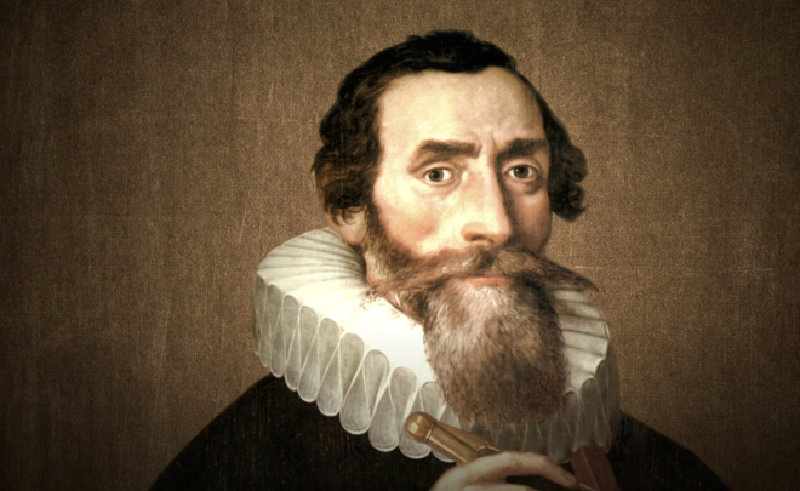
This is the name of a German astronomer and mathematician, Johannes Kepler.
He was a truly amazing person. For example, he’s the one who discovered that planetary orbits are elliptical. It’s common knowledge now, but back then (around 1600), even the heliocentric theory wasn’t widely believed.
- Galileo = The genius of observation
- Kepler = The genius who explained the universe with mathematical formulas
- Newton = The super genius who compiled those theories into physical laws
In that kind of positioning, Kepler was a pioneer of “explaining the universe with mathematical formulas.”
And then, one day, he brought this up.
What is Kepler’s Conjecture?
Put simply, “Kepler’s Conjecture” is about this:
When packing spheres of the same size (like watermelons or oranges) into a box, which arrangement packs them the tightest?
That’s the problem.
And what Kepler conjectured in the 1600s was:
Isn’t it most efficient to stack them in a triangle-like shape, just like how oranges are displayed at a greengrocer?
That was it.
To say this more mathematically, it’s called the “Sphere Packing Problem,” which is the problem of finding the densest way to pack spheres into space.
Kepler conjectured that an arrangement called “Face-Centered Cubic (FCC)” structure (like stacking watermelons in a triangle) is the most efficient.
And, while everyone thought, “That certainly seems right,” it was incredibly difficult to mathematically prove that “This is absolutely the best!”
400 Years Until It Was Proven!?!
So, when was it actually proven?
Surprisingly, around 1998 to 2005. In other words, no one could prove it for nearly 400 years. That’s crazy.
Moreover, it was proven by an American mathematician named Thomas Hales.
He decided it was impossible to do by hand calculations alone, and proved it using computers. However, the proof was so complex that a problem arose: humans couldn’t properly check it!
This sparked a huge debate in the mathematical world: “So, can we really trust a proof done by a computer?”
In the end, the proof that said, “We have rigorously verified it, including the computer part!” (formally known as a “formal proof”) was completed in 2014.
In other words, it took over 400 years to prove that Kepler’s intuition was right. What a romantic story.
It’s Used a Lot in Real Life Too
You might think that “how to arrange spheres” is just a topic for math nerds, but it’s actually super practical.
- Efficiently packing drinks in a convenience store refrigerator
- Loading canned goods onto transport pallets
- Applied to communications (like digital signal compression)
- Used in 3D printers and the design of crystal structures
And so on, it’s a theory that’s actually heavily used behind the scenes in our daily lives.
Summary: Human Intuition is Amazing
So, let’s summarize.
- Kepler’s Conjecture = The problem of how to pack spheres as tightly as possible
- Mr. Kepler = The mathematician and astronomer who discovered planetary orbits
- Conjectured in the 1600s! But proven in the 2000s!
- It’s highly applied in real life!
And the most interesting part is that “the way greengrocers intuitively stacked things was mathematically the strongest.”
In short, human intuition is amazing. And the fact that it can take 400 years to prove it is such a romantic story.
If you’re interested, please try searching for things like “Thomas Hales”, “Formal Proof”, and “Sphere Packing”. It’s incredibly fascinating when you dig deeper into it.
See you!
[PR]